Arsip:

SDGS GOAL 13: CLIMATE ACTIONS

UGM Faculty of Animal Science Reaffirms Environmental Commitment Through Plastic-Free PIONIR

Plastic waste is known to be hazardous due to its detrimental effects on the environment and human health. Plastic pollutes soil, water, and air, and can break down into microplastics that pose risks if they enter the body. Furthermore, burning plastic waste releases toxic substances that can trigger various health issues.

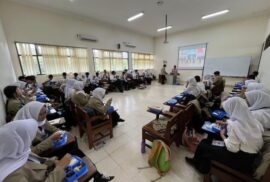
Demonstrating its concern regarding this issue, the Faculty of Animal Science at UGM has taken concrete action by eliminating the use of plastic during the 2025 New Student Campus Life Introduction (PIONIR) program, held from August 4 to 9, 2025. All meals provided during the event are prepared without single-use plastic packaging. read more
UGM Faculty of Animal Science Lecturer Participates in IEIF ASEAN Research Collaboration Project in Australia

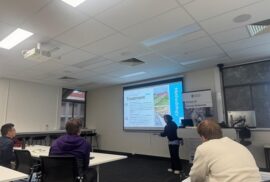
Dr. Aeni Nurlatifah, a lecturer at the Faculty of Animal Science at Universitas Gadjah Mada, was selected as one of 39 Early Career Researchers (ECRs) from the ASEAN region to participate in the International Education Innovation Fund (IEIF) ASEAN Research Collaboration Project, running from June 1 to August 29, 2025. This program is an initiative of the Australian Government implemented at various leading research institutions, with the University of Western Australia (UWA) serving as the host institution. read more

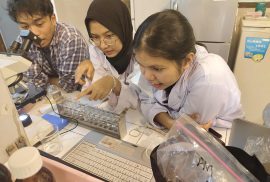
UGM Students Utilize Seaweed and Noni Fruit to Reduce Methane Emissions from the Livestock Sector

The world today is abuzz with the term “global boiling” due to the drastic increase in average temperatures in various parts of the world. Methane emissions are one of the causes of global boiling. The Global Monitoring Laboratory states that methane emissions have been rising since 1980, from 1,620 ppb to 1,933.46 ppb in October 2023. These emissions have the potential to increase global temperatures 28 times more than CO2. About 20-25% of total methane emissions come from livestock activities, specifically through enteric fermentation in the rumen of livestock, which produces methane gas that is then released through feces and burping. read more