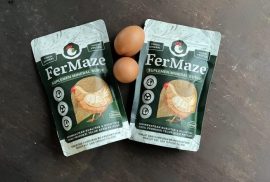
The laying hen farming industry in Indonesia continues to experience rapid growth; by mid-2025, national production had reached 6,52 million tons. High demand for animal protein has made this sector increasingly attractive to everyone from young farmers to agribusiness investors. However, alongside these significant opportunities, serious challenges have emerged, specifically, chicken manure waste causing air and water pollution, as well as public health risks stemming from ammonia and hydrogen sulfide gases released during decomposition.
SDGS 2: Zero Hunger
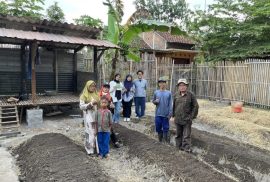
An-Nur Islamic Boarding School in Bantul, one of the largest of its kind in Indonesia, is taking strides toward realizing the concept of a self-reliant and sustainable boarding school. In collaboration with a community service team from the Faculty of Animal Science at UGM, led by Prof. Nafiatul Umami from the Forage and Pasture Laboratory, Department of Animal Nutrition, the school has initiated a program integrating maggot waste processing and organic waste management to develop poultry pastures.
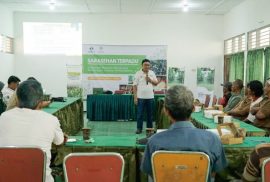
To enhance sustainable livestock feed security and empower communities living near forests, a Community Service Team from the UGM Faculty of Animal Science, led by Prof. Bambang Suhartanto, organized a training session titled “Implementing Agroforestry Systems to Enhance Sustainable Feed Security”. The event took place on Saturday, August 30, 2024, at the Wanagama Forest Area with Special Purpose or Kawasan Hutan dengan Tujuan Khusus (KHDTK) in Gunungkidul.
Funded by the UGM Directorate of Community Service, this program focuses on providing support to the “Mitragama” livestock farmer group. The initiative aims to address the shortage of green forage during the dry season by utilizing the land beneath tree canopies at KHDTK Wanagama through an agroforestry system.
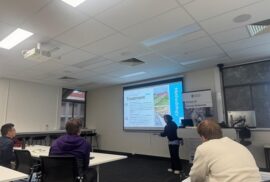
Dr. Aeni Nurlatifah, a lecturer at the Faculty of Animal Science at Universitas Gadjah Mada, was selected as one of 39 Early Career Researchers (ECRs) from the ASEAN region to participate in the International Education Innovation Fund (IEIF) ASEAN Research Collaboration Project, running from June 1 to August 29, 2025. This program is an initiative of the Australian Government implemented at various leading research institutions, with the University of Western Australia (UWA) serving as the host institution.
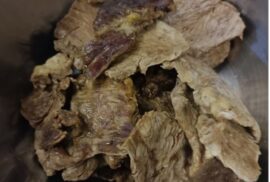
The Faculty of Animal Science at Universitas Gadjah Mada, specifically the Department of Animal Product Technology, has once again demonstrated its commitment to fostering innovation in the livestock sector. In a recent study published in the Journal of Advanced Veterinary and Animal Research, Dr. Ir. Endy Triyannanto, S.Pt., M.Eng., IPM., ASEAN Eng., and his research team revealed the significant potential of cinnamon and citrus leaf essential oils to enhance the quality and shelf life of processed meat products, particularly se’i (smoked beef). This research represents a significant effort to address the relatively short shelf life of se’i by leveraging the natural antioxidant and antimicrobial properties of these essential oils.