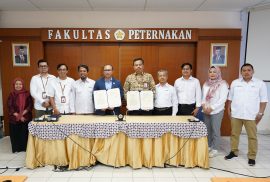
Faculty of Animal Science UGM and the National Research and Innovation Agency (BRIN) signed a Cooperation Agreement (PKS) on Monday (August 19) at Faculty of Animal Science. The signing ceremony was attended by the Dean Faculty of Animal Science UGM, Prof. Ir. Budi Guntoro, S.Pt., M.Sc., Ph.D., IPU., ASEAN Eng., and the Head of the Center for Research on Technology and Food Processing of BRIN’s Agricultural and Food Research Organization, Satriyo Krido Wahono, Ph.D. The focus of the cooperation is research on technology and food processing for the development of processed animal products.
SDGS GOAL 9: INDUSTRY INNOVATION INSFRASTRUCTUR
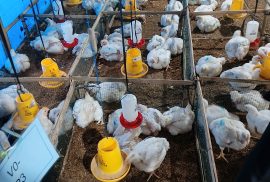
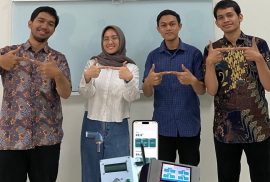
Five students from Universitas Gadjah Mada (UGM) have formed the PKM-KI Team to develop “HeatAway,” a device designed to mitigate the impact of heat stress on broiler chickens. The team members include Shafira Adelia (Animal Science and Industry, 2022), Satria Anggit Pamungkas (Electronics and Instrumentation, 2021), Ihza Surya Pratama (Electronics and Instrumentation, 2021), Muhammad Hanan Hawari (Electronics and Instrumentation, 2021), and Raden Fakhru Rossy (Electronics and Instrumentation, 2021), under the guidance of Dr. Danang Lelono, S.Si, M.Sc.
The world today is abuzz with the term “global boiling” due to the drastic increase in average temperatures in various parts of the world. Methane emissions are one of the causes of global boiling. The Global Monitoring Laboratory states that methane emissions have been rising since 1980, from 1,620 ppb to 1,933.46 ppb in October 2023. These emissions have the potential to increase global temperatures 28 times more than CO2. About 20-25% of total methane emissions come from livestock activities, specifically through enteric fermentation in the rumen of livestock, which produces methane gas that is then released through feces and burping.
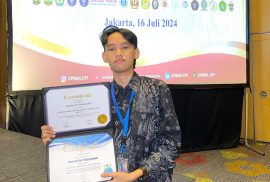
Hastomo Nur Hidayatulloh, student 0f Faculty of Animal Science UGM, received the Charoen Pokphand Best Student Appreciation (CPBSA) award. CPBSA is a scholarship program from PT Charoen Pokphand Indonesia (CPI), awarded to final-year students from various disciplines and universities in Indonesia through a rigorous selection process.
Hastomo explained that the program’s participants comprised 21 students from 16 universities. The series of activities began on May 13 and continued until July 22, 2024.
In broiler chicken production, the health of the small intestine is crucial for optimal growth. Pathogenic microbes in the small intestine can infect the digestive tract, causing inflammation and nutrient absorption issues, leading to suboptimal growth.
In recent decades, antibiotic growth promoters (AGP) have been used by farmers to enhance broiler chicken growth performance, administered through feed or drinking water. However, in 2018, the Indonesian government officially banned the use of AGP as additives in livestock due to concerns about AGP residues in chicken meat, which could increase bacterial resistance and cause allergic reactions in humans.