
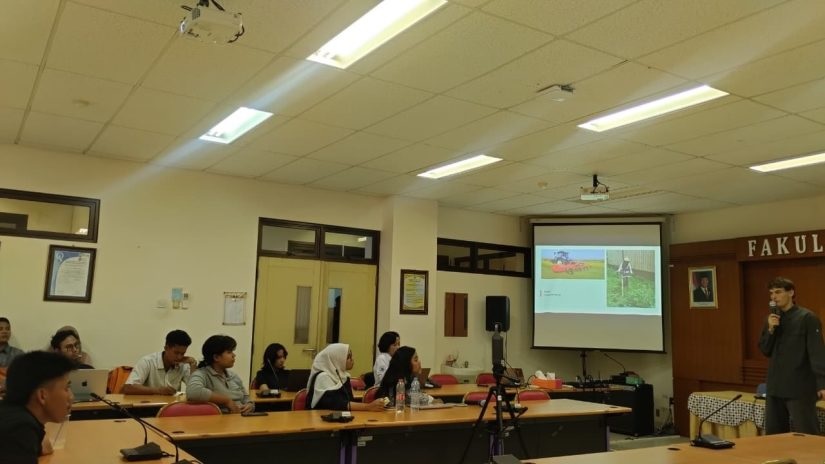
A master’s student at Wageningen University & Research (WUR), the Netherlands, Siep Jossi Missaar, shared his firsthand experience in organic dairy farming and artisanal cheesemaking during a sharing session attended by laboratory assistants and lecturers at the Faculty of Animal Science Universitas Gadjah Mada (Fapet UGM), on Monday (11/5).
The session brought together lecturers and assistants from the Laboratory of Beef Cattle, Draught Animals, and Companion Animals, as well as the Laboratory of Dairy Science and Milk Industry.
During his presentation, Siep explained how organic dairy farming in France, where he has lived since childhood, is managed sustainably, with a strong emphasis on animal health, natural feed, and strict hygiene standards in milk and cheese production.
“A good dairy farm is not only about achieving high milk yields but also about maintaining animal health, providing high-quality natural feed, and ensuring hygienic production processes to produce premium-quality cheese,” he stated.
Siep described his family farm, which spans approximately 110 hectares and is home to around 110 animals, including 60 lactating dairy cows. The farm produces roughly 200,000 liters of milk annually, with most of the milk processed into cheese directly on-site.
According to Siep, one of the farm’s unique features is its use of 14 different cattle breeds and a pasture-based feeding system without silage or imported feed.
“We rely on grazing and hay as the primary feed sources. This is essential for maintaining both milk quality and the distinctive flavor of our cheese,” he explained.
He also described the process of making hay, emphasizing that weather conditions play a crucial role in producing high-quality forage. The grass must reach the proper level of dryness to prevent mold growth while preserving its nutritional value.
In addition, Siep outlined the key stages of cheesemaking, including milk heating, the addition of bacterial cultures and rennet, curd formation, molding, salting, and the aging process under controlled temperature and humidity.
“Cheesemaking requires great precision because the quality of the milk directly influences the quality of the final product,” he noted.
Siep also compared organic dairy farming with conventional dairy systems in Europe, which generally rely on more intensive management and the use of silage and concentrate feeds to maximize milk production.
While organic farming typically produces lower milk yields than intensive systems, he explained that it offers significant advantages in terms of environmental sustainability, animal welfare, and product quality.
Prof. Tri Satya Mastuti Widi, a faculty member at Fapet UGM and an alumna of Wageningen University & Research for both her master’s and doctoral studies, said the sharing session provided participants with valuable insights into sustainable livestock management practices as well as student life and academic experiences in Europe, particularly in the fields of animal science and dairy production.
Author: Satria
Translated by: Merlin Fatika Ramadhani
Original article: https://fapet.ugm.ac.id/mahasiswa-wur-belanda-bagikan-pengalaman-mengelola-peternakan-organik-dan-produksi-keju-di-perancis/