
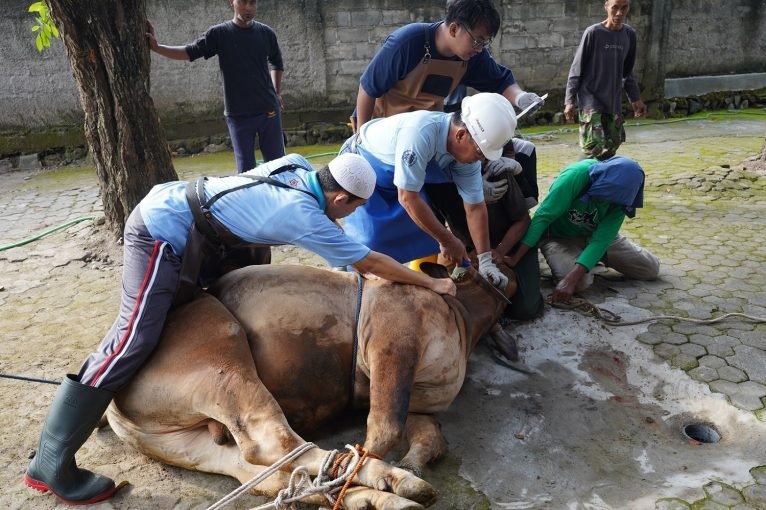
The Faculty of Animal Science Universitas Gadjah Mada (Fapet UGM) continues to promote higher standards for Eid al-Adha sacrificial practices by educating the public on proper animal handling and the hygienic management of sacrificial meat in accordance with the principles of halal, safety, ihsan, and hygiene.
Ir. Cuk Tri Noviandi, S.Pt., M.Anim.St., Ph.D., IPM., ASEAN Eng., a lecturer at Fapet UGM, explained that the act of qurban is more than simply slaughtering an animal. Rather, it is an act of worship that reflects devotion to Allah SWT and must be carried out responsibly and in accordance with Islamic principles. Therefore, sacrificial animals must meet both religious and health requirements, including the appropriate species, age, physical condition, and freedom from zoonotic diseases.
Cuk also emphasized that animal welfare should be a primary consideration during the slaughter process. He highlighted the importance of the internationally recognized Five Freedoms of Animal Welfare, ensuring that animals are free from hunger, thirst, pain, fear, and are able to express their natural behaviors.
“Treating animals properly helps ensure that the slaughtering process is both safer and of higher quality,” Cuk said on Tuesday (26/5).
He further advised organizing committees to maintain a calm environment throughout the slaughtering process. Crowds, excessive noise, and too many people in the slaughter area can cause stress to the animals and increase the risk of workplace accidents. For this reason, only essential personnel should be allowed inside the slaughter area, while children and spectators should remain outside the designated safety zone.
Proper preparation before slaughter is equally important. Animals should be given adequate rest, fasted for approximately 12 hours while continuing to receive drinking water, and kept in a comfortable holding area. Slaughter knives must be sharp, clean, and kept out of the animals’ sight. Organizers are also encouraged to prepare appropriate personal protective equipment (PPE), sanitation facilities, and a well-organized workflow to ensure both safety and hygiene.
“The slaughter should be performed with a single, effective cut at the correct position behind the Adam’s apple to ensure that the major vessels are completely severed in accordance with halal requirements,” he added.
Ensuring Hygienic Handling of Sacrificial Meat
In addition to proper slaughtering techniques, Fapet UGM also highlighted the importance of hygienic meat handling to ensure food safety.
Dr. Ir. Rio Olympias Sujarwanta, S.Pt., M.Sc., IPM., ASEAN Eng., another lecturer at Fapet UGM, advised slaughter committees not to smoke while cutting meat, and to avoid coughing or sneezing near meat products. He also cautioned against washing offal in rivers, where contamination from waste and harmful bacteria may occur.
“The use of disposable plastic gloves is recommended to minimize microbial contamination of sacrificial meat,” Rio explained.
He further recommended handling meat and offal separately to prevent cross-contamination and unpleasant odors. Meat should never be placed directly on the ground, as doing so can significantly increase bacterial growth. For distribution, communities are encouraged to avoid using black plastic bags, which may contain hazardous substances, and instead use bamboo baskets or other food-safe, environmentally friendly packaging.
Rio also advised that sacrificial meat should be cooked or refrigerated as soon as possible after processing to inhibit microbial growth. If the meat is already clean, it should not be washed before storage. Instead, it is best to refrigerate the meat for 12 to 24 hours before freezing, allowing the texture to improve while preserving its quality.
Author: Satria
Photo: Margiyono
Translated by: Merlin Fatika Ramadhani
Original article: https://fapet.ugm.ac.id/fapet-ugm-dorong-pelaksanaan-kurban-yang-halal-aman-ihsan-dan-higienis/