
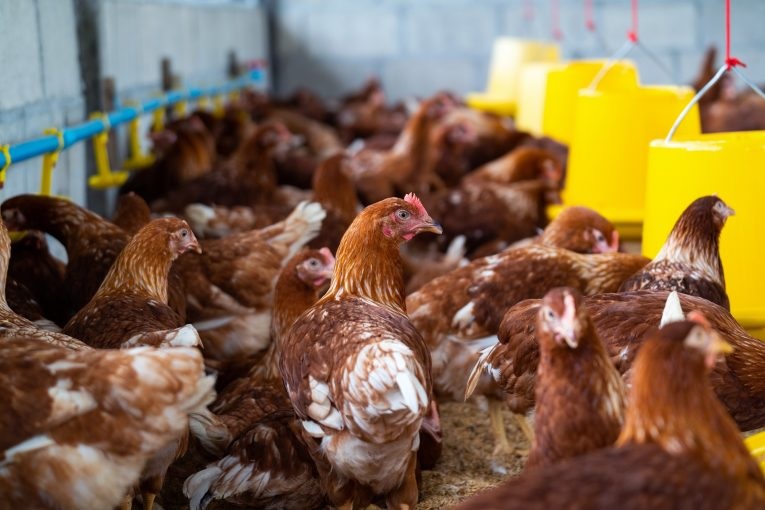
The government’s planned Rp20 trillion in credit from Danantara funds to strengthen the development of chicken farming is a strategic step towards national food self-sufficiency. This policy demonstrates the government’s commitment to ensuring the supply of animal protein for the public, particularly in supporting the free nutritious meal program for schoolchildren.
“This substantial financial support is deemed appropriate because it can increase the production capacity of livestock farmers, create jobs, stabilize chicken prices in the market, and assist small businesses that have previously faced capital constraints,” explained Professor of the Faculty of Animal Science UGM, Prof. Ir. Dyah Maharani, S.Pt., M.P., Ph.D., IPM, on Monday (24/11).
If implemented properly, Dyah added, this program can improve the nutritional quality of the younger generation and reduce dependence on food imports, thus providing a strong foundation for Indonesia’s future food security.
According to Dyah, although the Rp20 trillion credit policy for the chicken farming sector appears promising, it also raises concerns. The large allocation of funds has the potential to pose risks if its distribution is not strictly monitored. Previous experience shows that large credit schemes are often poorly targeted, tend to favor large companies, and make it difficult for small farmers who have limited collateral and access to information.
Furthermore, excessive focus on a single commodity, namely chicken, can create dependency and weaken the diversification of other animal foods such as fish, beef, or alternative poultry.
“If not managed carefully, this program risks oversupply, falling prices at the farmer level, and increasing the burden on the state budget if it does not produce a significant impact on food security,” said Dyah, who is also a member of the National Association of Animal Reproduction and Breeding Experts or Pengurus Asosiasi Ahli Reproduksi dan Pemuliaan Ternak Nasional (ARPENAS).
Priorities for Improvement
For this program to be successful and provide maximum benefits, Dyah outlined several improvement steps that should be considered. These include: the credit scheme must be designed to be inclusive, easily accessible, and not overly burdensome for small farmers with difficult requirements; prioritizing small farmers and MSMEs; strengthening the monitoring and transparency system; providing technical assistance and management training; building supply chains and infrastructure; and maintaining animal protein diversification.
Family Urban Farming Model
In addition to providing credit for large-scale livestock farming, the government can also encourage family urban farming models, such as raising laying hens within urban households. This program can be designed as a family micro-enterprise model that not only provides a daily source of animal protein for self-consumption but also provides additional income opportunities from the sale of surplus production.
With minimal capital, certified poultry seeds, technical training, and environmental sanitation assistance, urban families can manage mini-laying hen houses that are hygienic, scalable, and environmentally friendly. Unconsumed produce can be sold through, for example, village-level cooperatives, thus creating a mutually supportive business ecosystem between households, cooperatives (providers of Livestock Production Facilities or Sarana Produksi Peternakan (Sapronak) and business management assistants), and local markets.
This model has several benefits simultaneously:
- Directly strengthening family food security.
- Creating additional income sources with low business risk.
- Expanding the national food production base down to the grassroots.
- Building a culture of independence and productivity in urban communities.
Dyah emphasized that with this approach, the Rp20 trillion credit program not only strengthens the large-scale national livestock industry but also empowers grassroots communities, strengthens family economies, and reduces dependence on food supplies from outside the region. This program can also serve as an educational tool for families and children to understand the importance of food independence and healthy eating habits from an early age.
Original article: https://fapet.ugm.ac.id/pakar-peternakan-ugm-dukung-bantuan-hilirisasi-peternakan-ayam-sebesar-20-triliun-dengan-inovasi-urban-farming-berbasis-keluarga/
Translated by: Sarah Suminar