
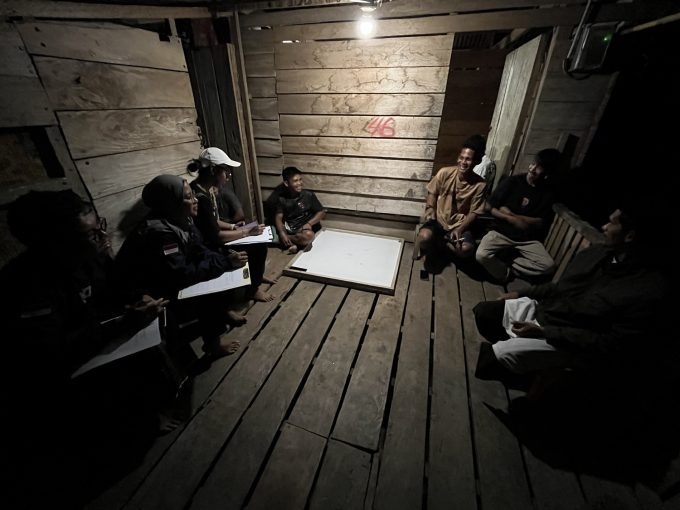
A research team from the Faculty of Animal Science in UGM participated in the Transmigration Patriot Expedition organized by the Ministry of Transmigration. The Patriot Expedition Team was tasked with exploring remote areas in West Sulawesi as part of a mission to build social harmony in transmigration areas, particularly in the Tubbi Taramanu Transmigration Area. This research combined field research, social experiments, and community service.
During the four-month expedition, The Faculty of Animal Science in UGM sent five personnel to West Sulawesi. The team was led by Dr. Moh. Sofi’ul Anam, S.Pt., M.Sc., with members Haidar Rais, Putri Safitri, Maria Hilary, and Naufal Dzaki.
“The main output of this research is to design a conflict management and prevention strategy by developing a comprehensive approach to identifying, mapping, addressing, and preventing social conflict in transmigration areas,” said Sofi’ul on Wednesday (19/11).
The Tubbi Taramanu Transmigration Area spans three sub-districts: Bulo, Luyo, and Tubbi Taramanu, with a total of 21 villages. The team recruited representatives from five key villages: Ratte, Taramanu Tua, Pollewani, Tubbi, and Piriang Tapiko, for social data collection and conflict mapping. Traveling to several locations, particularly Ratte Village, presented its own challenges. Limited road access, hilly terrain, and limited communication networks made the field trip challenging. However, behind these limitations, a portrait of the community’s extraordinary social resilience and spirit of life lurked.
“The trip to Ratte gave us an understanding that social resilience is not only built on policies, but also on the solidarity and values of cooperation that live within the community,” added Putri Safitri, a team member.
Observations and discussions with residents demonstrated that traditional institutions play a strong role in maintaining social harmony. This system demonstrates how local communities uphold the values of deliberation and mutual agreement as an essential foundation for creating a peaceful social life in the transmigration area.
However, the team identified other challenges beyond the social aspect, particularly related to limited infrastructure and access to basic services. Many residents must travel long distances, even carrying sick family members on stretchers, to reach healthcare facilities. This situation has led some transmigrants to choose to return to their hometowns due to difficulties accessing education, economic opportunities, and public services.
Despite these limitations, the transmigration program still holds significant potential as a gateway to regional development. The arrival of transmigrants, who bring skills, networks, and an entrepreneurial spirit, has begun to demonstrate the economic, social, and cultural development of the Tubbi Taramanu region.
Translated by: Sarah Suminar