
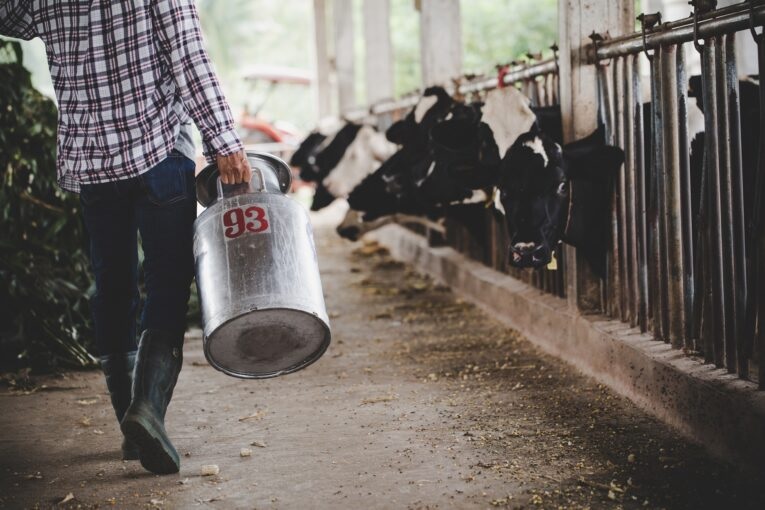
Efforts to promote the downstream development of Indonesia’s dairy industry should not focus solely on building and increasing the capacity of milk processing facilities. Strengthening the upstream sector, particularly smallholder dairy farming, must take place simultaneously to ensure that rising industrial demand translates into increased domestic milk production.
This view was expressed by two experts from the Faculty of Animal Science Universitas Gadjah Mada (Fapet UGM), Prof. Budi Prasetyo Widyobroto and Satyaguna Rakhmatulloh, M.Sc.
Prof. Budi Prasetyo Widyobroto emphasized that dairy industry development must be approached comprehensively. According to him, milk is a biological product generated through a complex livestock ecosystem, encompassing feed availability, healthy and productive dairy cattle, farmers, hygienic milking practices, cold-chain management, cooperatives, processing industries, distribution, and consumers.
Therefore, dairy industry development should not be viewed merely as a farm-to-factory process, but rather through a broader perspective of “from grass to glass.”
“Dairy industry development must not focus solely on the readiness of milk processing plants. Instead, it must be based on the readiness of the entire dairy ecosystem, particularly farmers’ ability to ensure a sustainable milk supply,” Prof. Budi said on Wednesday (7/10).
He explained that the success of dairy industry development should not be measured solely by increased processing capacity or the volume of dairy products produced. Other important indicators include greater utilization of locally produced fresh milk, improved dairy farmer productivity, and increased economic value received by farmers.
Not a Series of Disconnected Programs
Satyaguna Rakhmatulloh shared a similar view, emphasizing that downstream development must go hand in hand with increases in the population of productive dairy cattle and milk yield per animal, rather than simply increasing the number of cattle.
According to Satyaguna, adding more dairy cattle does not automatically lead to higher milk production. The genetic potential of cattle can only be fully realized when supported by sufficient feed, good animal health and comfort, effective reproductive management, and proper farm management.
Therefore, Indonesia’s dairy sector must be developed as an integrated ecosystem rather than through separate programs operating independently.
“Adding more cattle does not necessarily mean producing more milk,” he stressed.
He noted that the main objectives of dairy sector development should include improving productivity, health, reproduction, milk quality, and the productive lifespan of dairy cattle. At the same time, farmers’ needs must also be addressed, including strengthening their knowledge and skills in dairy farm management.
Satyaguna also highlighted the importance of strengthening feed systems. The availability of forage and concentrates that meet appropriate quality standards is essential to improving productivity while reducing production costs and the risk of health problems in dairy cattle.
An Opportunity to Strengthen Smallholder Dairy Farming
The downstream development of the dairy industry has become increasingly strategic amid rising national milk demand and the expansion of milk processing industries. The Free Nutritious Meals (MBG) program also has the potential to increase domestic demand for dairy products.
However, this momentum should be used to strengthen the position of smallholder dairy farmers as key players in the supply chain.
For Prof. Budi and Satyaguna, the development of milk processing industries should not proceed in isolation. Rising industrial demand must serve as an incentive to increase production at the farm level.
Ultimately, downstream development should do more than increase the output of processed dairy products. It should also establish a stronger, more productive, and sustainable national dairy ecosystem that delivers greater economic benefits to farmers.
Author: Satria
Photo: Magnific.com
Translated by: Merlin Fatika Ramadhani
Original article: https://fapet.ugm.ac.id/dosen-fapet-ugm-hilirisasi-susu-harus-memperkuat-ekosistem-persusuan-dari-hulu-hingga-hilir/