
Universitas Gadjah Mada continues to strengthen its role in advancing sustainable technologies through the 2026 International Summer Course titled “Sustainable and Green Leather Technology: From Conventional Processing to Bio-Based Innovation” hosted by the Faculty of Animal Science Universitas Gadjah Mada (Fapet UGM). Held from May 18 to June 5, the program brought together international experts to discuss environmentally friendly leather processing innovations and the application of livestock genomics for sustainable agricultural systems.
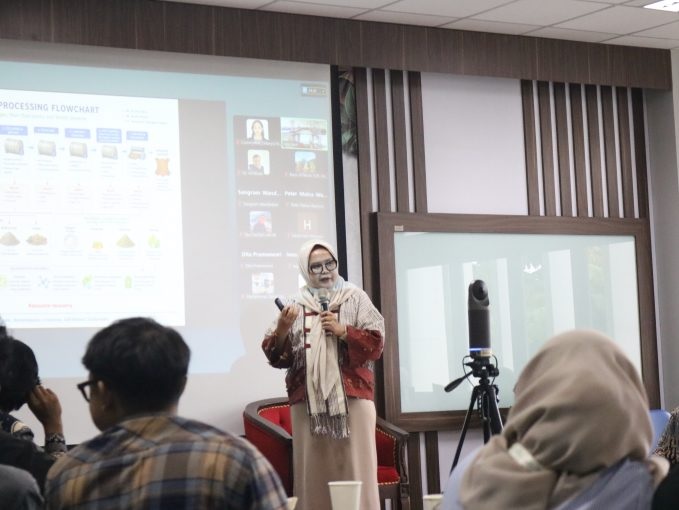
One of the keynote sessions was delivered by Prof. Wiratni Budhijanto from UGM’s Faculty of Engineering, who highlighted the importance of sustainable leather waste management through a circular economy approach. She emphasized that the future of the leather industry depends not only on the quality of its products but also on its ability to manage waste responsibly and efficiently.
According to Prof. Wiratni, the global leather tanning industry remains heavily reliant on chromium tanning, which accounts for approximately 80-90 percent of worldwide production. This process generates substantial amounts of solid and liquid waste each year. From every 1,000 kilograms of raw hide, only about 200 kilograms are converted into finished leather products, while the remaining material becomes waste.
She also explained that chromium-containing waste can potentially transform into hexavalent chromium (Cr(VI)), a highly toxic substance that poses serious environmental risks. Therefore, she stressed the need to shift the industry’s mindset from conventional waste disposal toward resource recovery, where waste is treated as a valuable resource rather than discarded.
The summer course introduced participants to a range of waste management technologies, including thermal treatments such as pyrolysis and gasification, as well as chemical, biological, and integrated resource recovery systems. These approaches are expected to support the development of a circular, bio-based economy within the leather industry.
Another session was delivered by Sobur Ahmed from the University of Dhaka, who discussed the wet-end and finishing processes in leather manufacturing. He explained the post-tanning stages, including neutralization, dyeing, retanning, and finishing, which play a critical role in improving the quality, durability, and appearance of leather products.
Beyond sustainable leather technology, the summer course also featured a lecture on livestock genomics by Nigatu Ayele Adossa from the International Livestock Research Institute (ILRI). In his presentation, Nigatu underscored the importance of exploring the genetic diversity of African livestock to enhance food security, livestock productivity, and climate resilience.
Through this international summer course, UGM reaffirmed its commitment to fostering interdisciplinary collaboration and promoting innovative, science-based solutions that support environmental sustainability and the future of agriculture.
Author: Satria
Translated by: Merlin Fatika Ramadhani
Original article: https://fapet.ugm.ac.id/dari-limbah-kulit-hingga-genomik-ternak-ugm-dorong-teknologi-berkelanjutan/