
The livestock industry, while a primary source of animal protein, faces significant challenges regarding global warming due to high methane (CH₄) emissions. According to the Global Methane Initiative (2025), this sector accounts for 2,614.42 MMTCO₂e, or 33% of total global CH₄ emissions, surpassing the oil and gas industry. Over 20 years, the impact of CH₄ on global warming has been recorded as 80 times greater than that of CO₂. Beyond environmental pollution, these emissions also result in economic losses for livestock farmers; ruminants can produce 250-500 liters of CH₄ daily, representing a loss of 3-17% of dietary energy.
One solution being developed is a zinc oxide (ZnO)-based feed additive capable of inhibiting CH₄ production by disrupting the cell membranes of methanogens. However, inorganic ZnO suffers from low bioavailability and potential toxicity.
“To address this, we, a research team from Universitas Gadjah Mada, have developed an innovative feed additive based on zinc oxide (ZnO) nanoparticles produced via green synthesis using meniran (Phyllanthus niruri) leaf extract. This serves as an eco-friendly solution to curb methane (CH₄) emissions from ruminant livestock,” said Rizal, a team member who initiated the project, on Tuesday (7/10).
The PhylloZinc team is participating in the 2025 Student Creativity Program for Exact Sciences Research (PKM-RE) with the project title: “Potential of Green Synthesis of ZnO Nanoparticles Using Phyllanthus niruri Leaf Extract: An Innovative Solution for Methane Emission Mitigation via Ruminant Feed Additives”.
The team conducting this research under the Student Creativity Program (PKM) consists of Jesslyn Beatrice (Faculty of Animal Science, Class of 2023), Zahwa Tsuroyya A. Z. (Faculty of Biology, Class of 2023), Rona Ayyu H. (Faculty of Veterinary Medicine, Class of 2023), Ahmad Rizal Riswanda D. (Faculty of Animal Science, Class of 2022), and Catherine Noor (Faculty of Animal Science, Class of 2023), who serves as the team leader. Additionally, Dr. Moh. Sofi’ul Anam, S.Pt., MSc., a lecturer from the Faculty of Animal Science, serves as the project supervisor.
“We have now entered the advanced testing stage, as the synthesis of the ZnO nanoparticles is complete. We hope the results of this research will prove beneficial in addressing the issue of methane gas, which remains a major challenge in the livestock industry,” added Catherine.
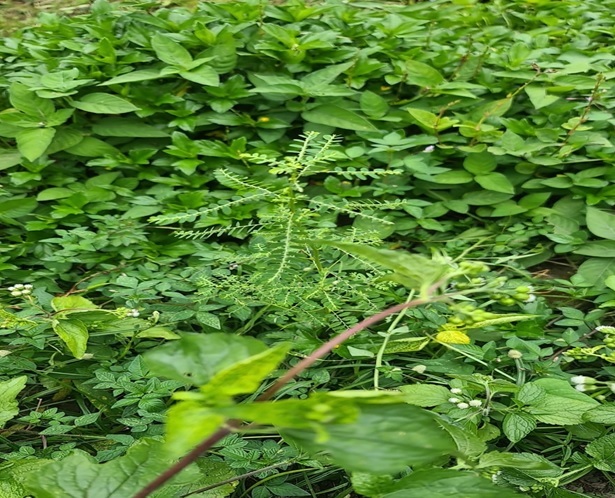
Beyond addressing methane emissions, this innovative feed formulation is expected to enhance livestock health and productivity. To achieve this, the PhylloZinc team utilized the Phyllanthus niruri plant, commonly known as meniran, due to its exceptionally high flavonoid content and ease of sourcing.
The green synthesis process yielded ZnO in the form of both powder and solution at the nanoscale. Following production, the nanoparticles underwent characterization using spectrophotometry, PSA, XRD, and SEM. Additionally, the ZnO nanoparticles were tested in vitro at the Animal Feed Technology Laboratory of the Faculty of Animal Science, UGM. The in vitro testing generated rumen fluid and gas samples, which were then subjected to further analyses, including microbial protein, ammonia, VFA, rumen fluid pH, and RT-PCR tests.
“With research funding support from Belmawa and UGM, we conducted this study over four months at the Faculty of Animal Science, UGM, involving a multidisciplinary team. Our research aligns with the 2025 PKM theme number 8: environmental conservation and disaster mitigation,” stated Jesslyn.
Developing green ZnO nanoparticles from meniran leaves to curb livestock methane emissions represents a strategic innovation supporting modern, sustainable, and eco-friendly animal husbandry; it also serves as a significant contribution to mitigating global warming and boosting livestock productivity.
Translated by: Sarah Suminar